
Buyer's guide
Buying a house in Spain – step by step
Buying a home in Spain is simpler than many Swedish buyers expect, but the process differs from home. There is no Swedish-style bidding round, you sign a binding private contract early, and you need a Spanish tax number before you can sign at the notary. Here is the whole chain, from first idea to keys in hand.
1. Set a realistic total budget
Budget for the purchase price plus roughly 10–14 per cent in taxes, notary, registration and legal fees. New builds are taxed differently from resale homes, so the cost depends on what you buy. Decide too how much you want to spend on furnishing and any renovation.
2. Choose the area before the property
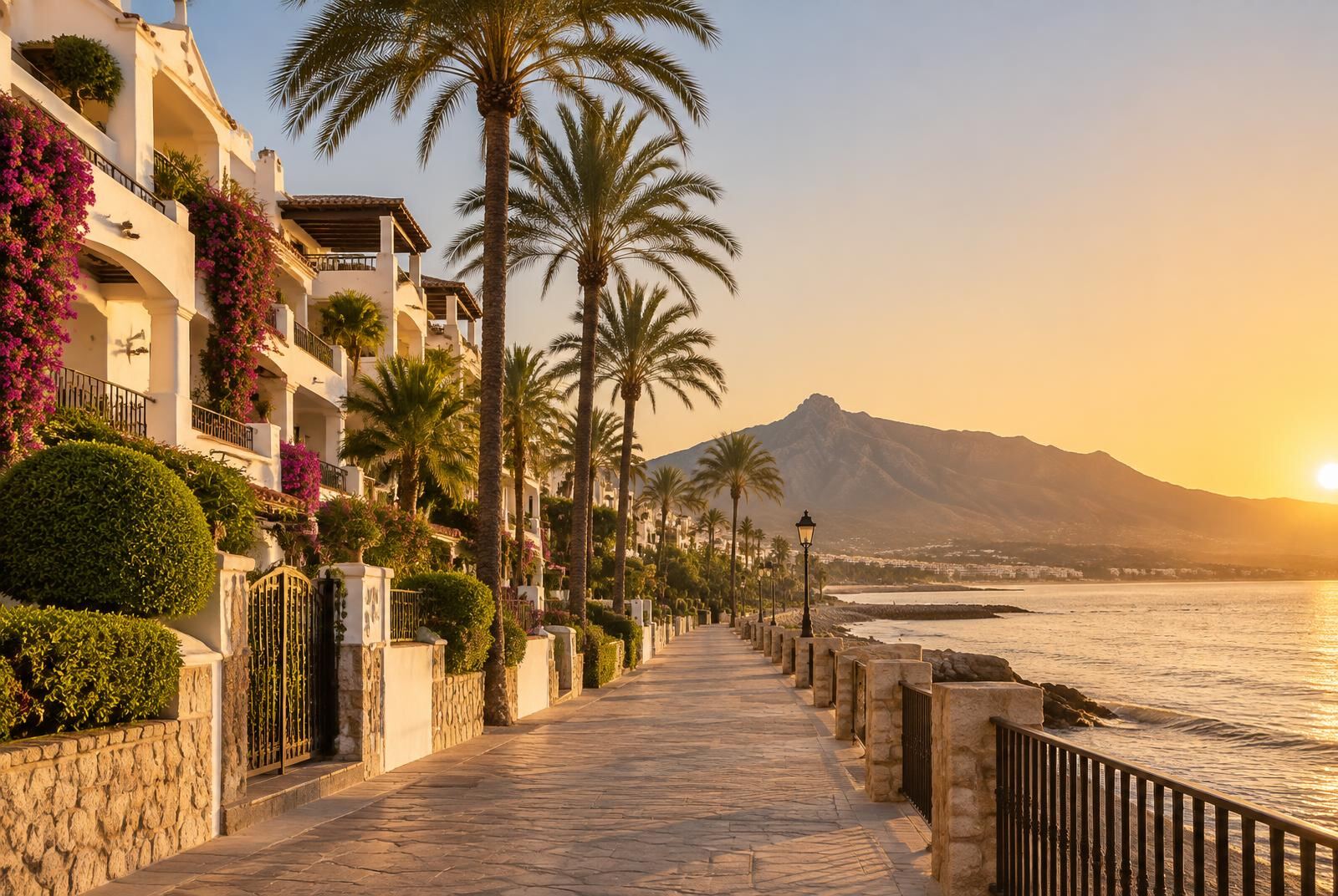
The difference between towns on the Costa del Sol is bigger than the difference between two apartments on the same street. Travel time from the airport, whether the town lives in January, access to Scandinavian services and price per square metre all vary. Read our four area guides and pick two towns to visit.
3. Get a NIE and a Spanish bank account
The NIE is your Spanish tax and identity number, required for the purchase, utilities and taxes. You can apply at the Spanish consulate in Sweden or in Spain, and a power of attorney to your lawyer makes it smoother. A Spanish account is needed for running costs.
4. Go on a viewing trip
Set aside two to three days and see six to ten properties in your chosen areas. View them in daylight and in the evening, and walk the same route to the beach, the shop and the restaurant you would use day to day. Photograph the view, the parking and the shared areas.

5. Hire your own lawyer
Use an independent Spanish lawyer who is not connected to the seller or the agent. The lawyer confirms that the seller owns the property, that it is free of debts and mortgages, that permits and registered areas match reality, and that community fees are paid.
6. Reservation and private contract
First you pay a small reservation fee so the property leaves the market. Then comes the private contract, where you normally pay 10 per cent of the price. It is binding — walking away without valid grounds costs you the deposit, and the seller carries the mirror-image liability.
7. Notary, payment and keys
Completion happens at the notary, where the balance is paid and you receive the title deed. The purchase is then registered, and utilities and community fees are transferred to you. If you cannot attend, your lawyer can sign under a power of attorney.
8. After the purchase
As an owner you pay municipal property tax (IBI), refuse charges, community fees and an annual Spanish tax return even if you do not let the home. If you do let it, Andalusia normally requires a tourist licence number, and rental income is declared in both Spain and Sweden.
9. Price levels town by town
Price per square metre varies sharply between towns, and that is usually where the budget is decided. In Marbella a two or three bedroom in a good location sits around EUR 280k–750k, Nueva Andalucía around EUR 330k–650k in golf-side complexes, Estepona around EUR 230k–520k and Fuengirola around EUR 190k–370k. For a villa, Estepona starts near EUR 650k while Marbella and Nueva Andalucía start nearer EUR 900k–1.1M. Read the area guides before fixing your bracket.
10. Seven mistakes buyers make
Most problems we see can be avoided with a few simple rules.
- Signing the private contract before an independent lawyer has reviewed the papers.
- Budgeting only the price and forgetting the 10–14 per cent in costs.
- Choosing the property before the town, then finding the area shuts in January.
- Not checking the community fee, finances and letting rules.
- Assuming the registered area matches reality without checking.
- Applying for the NIE too late, pushing back the notary date.
- Only seeing the home in summer light, never on a grey winter day.
11. A timeline in weeks
A typical purchase of a resale home takes about three months from first contact to keys.
- Week 1–2: budget, area choice and contact with an agent partner.
- Week 2–4: NIE application and mortgage pre-approval started.
- Week 4–6: viewing trip and choosing the home.
- Week 6–7: reservation, legal review and private contract with 10 per cent.
- Week 10–14: notary, final payment, registration and keys.
Areas to read next
Prices, pace and services differ between towns. These are the four we work with — each guide has price levels, neighbourhoods and practical facts.
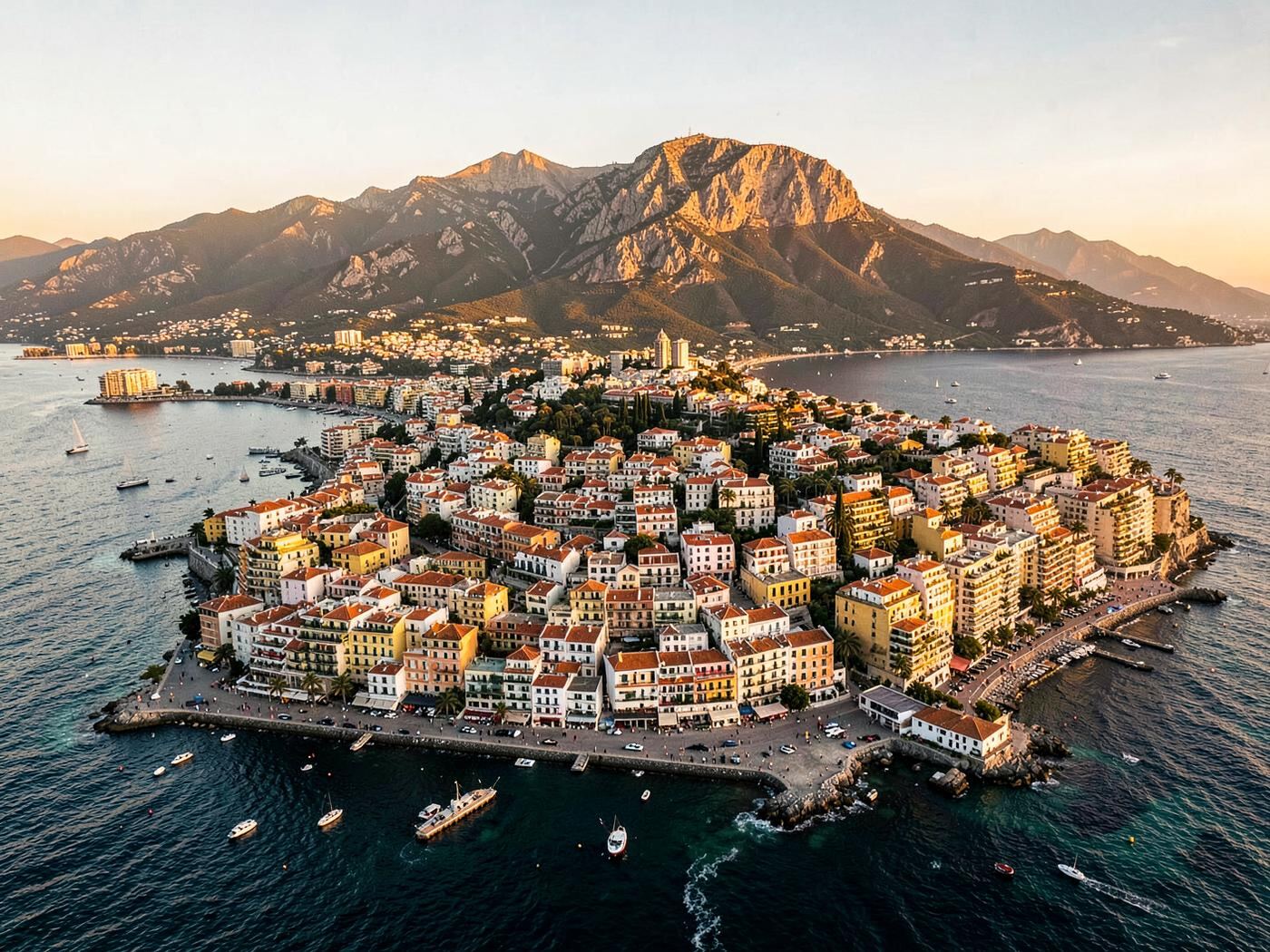
Marbella
The best known address on the coast, alive all year, with the highest prices.
Read the area guide
Nueva Andalucía
The golf valley above Puerto Banús — views, calm and more space.
Read the area guide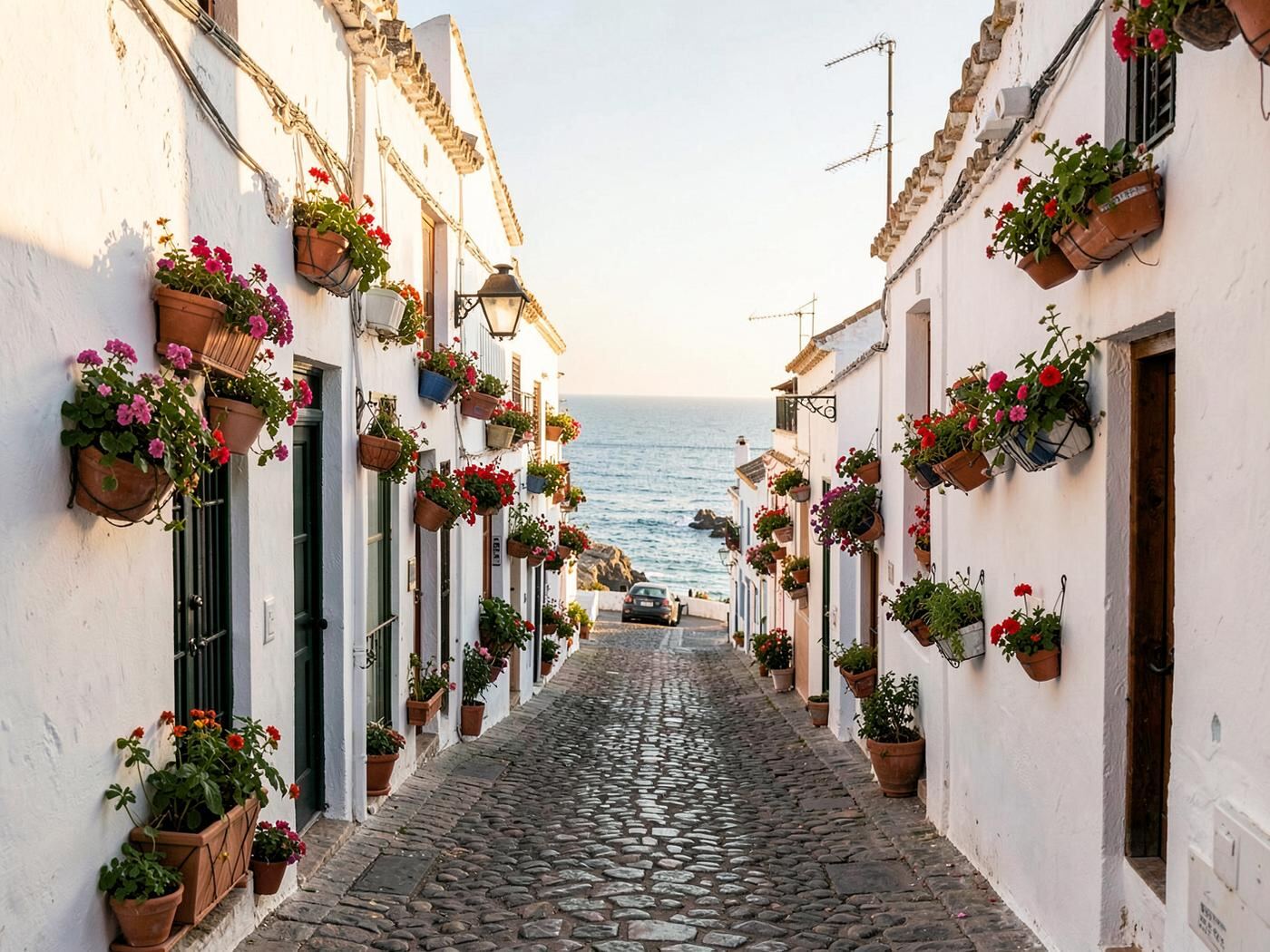
Estepona
An Andalusian town with plenty of new build and lower price per square metre.
Read the area guide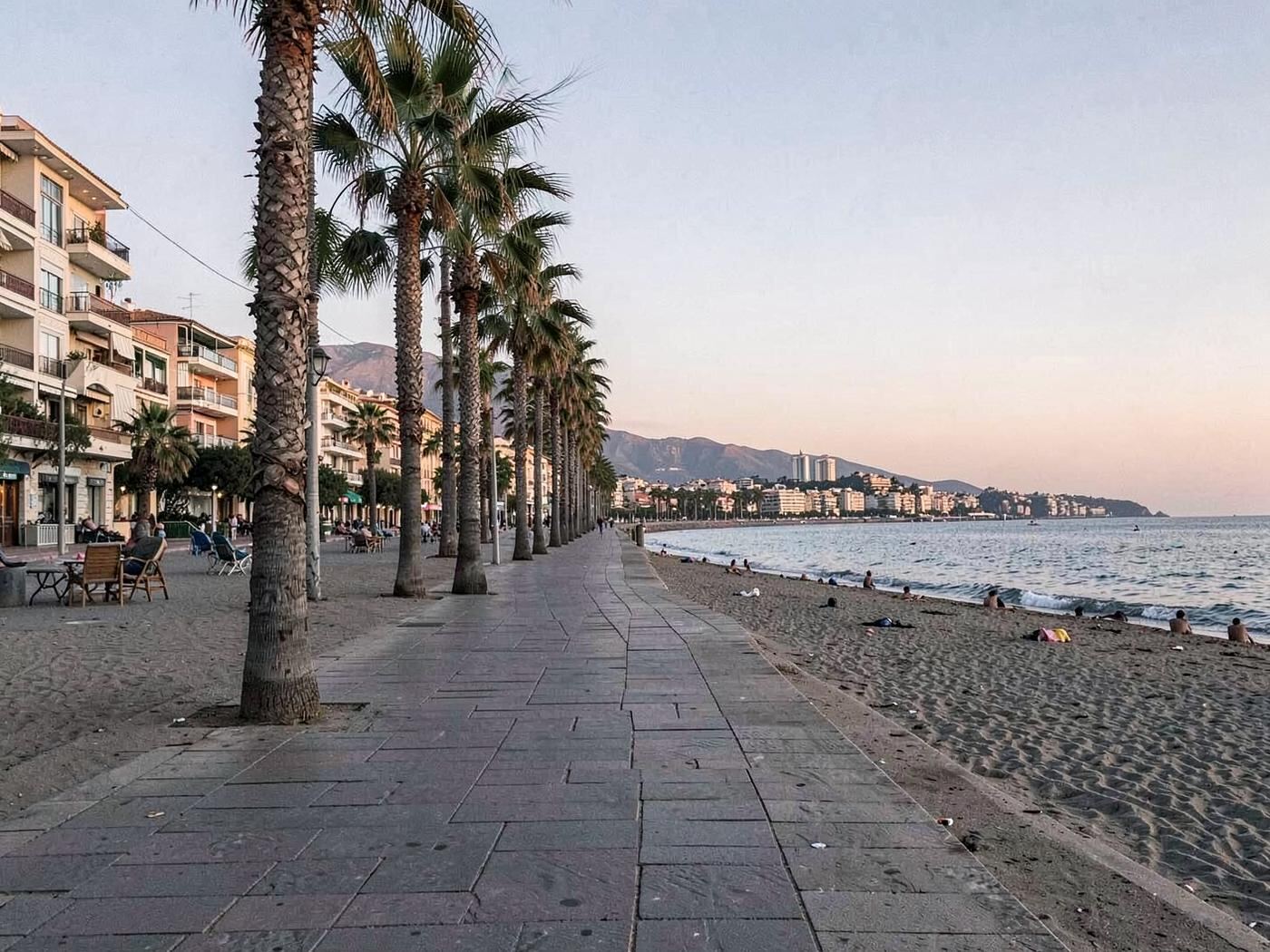
Fuengirola
Swedish school and services plus a train to the airport — the lowest apartment prices of the four.
Read the area guideFrequently asked questions
- How long does a purchase take?
- From private contract to notary usually takes four to eight weeks for a resale home. New builds follow the construction schedule and can take one to two years.
- Can I get a Spanish mortgage?
- Yes. Spanish banks typically lend up to around 70 per cent of value to non-residents, against Swedish income documentation.
- Do I need to be there in person?
- No. With a power of attorney your lawyer can apply for the NIE and sign at the notary, but we recommend seeing the property in person before the private contract.
Other guides
- Golf & homes
- Marinas & boating
- What does buying in Spain cost?
- NIE, bank account and mortgage
- Estate agency in Spain
- Buying property in Spain as a Norwegian
- Compare the areas
This is general guidance, not legal or tax advice. Always confirm current rules and amounts with your lawyer.
Read on
Take the next step — compare towns, read through the buying process or tell us what you are looking for.
- Buying an apartment in Marbella – area guide
Golden Mile, Puerto Banús and the old town, with prices and an English-speaking partner agent.
- Buying a house in Estepona – area guide
A real Spanish town centre, new builds and more space per euro than Marbella.
- A villa in Nueva Andalucía – golf valley area guide
Golf-side villas and townhouses with La Concha views, five minutes from Puerto Banús.
- An apartment in Fuengirola – area guide
Nordic community, train to the airport and the best value central locations on the coast.
- A home in Benalmádena – area guide
The village, Arroyo de la Miel and the marina, about 20 minutes by train to the airport.
- Buying a house in Mijas – area guide
White-village life in Mijas Pueblo, golf and good-value villas in Mijas Costa.
- A villa in Sotogrande – area guide
Valderrama, polo, a marina and plenty of space and privacy.
- Buyer's guide: how to buy a house in Spain
Step by step from budget and NIE number to notary and keys.
- Estate agents in Marbella – how to compare
Five criteria for choosing the right agent, plus free matching with a partner agent.
- Estate agencies in Spain – how to choose
Swedish chains, international networks or local offices – questions to ask and pitfalls to avoid.
- All guides to buying property on the Costa del Sol
Costs, taxes, NIE, bank account and mortgages in one place.
- Get free area suggestions
Tell us your budget, timing and preferred area — we connect you with a local partner agent.
Free of charge
We suggest areas for you
Marie Segerholm
Founder, Solria · Personal contact
- ✓ Free for you as a buyer – no fees, no obligations
- ✓ Personal contact within hours, every weekday
- ✓ Swedish- or English-speaking partner agent
- ✓ No sales calls – we contact you only the way you choose